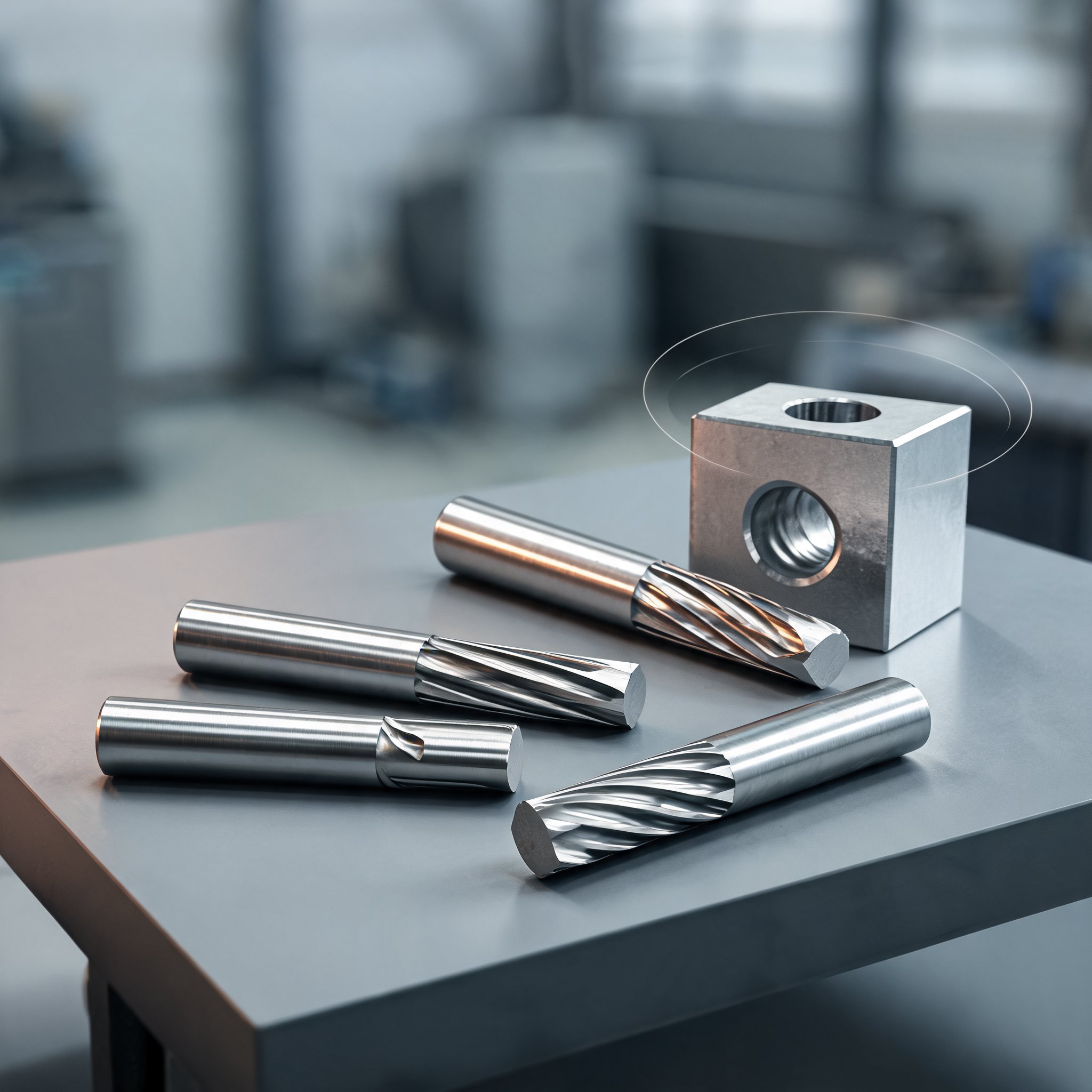
Seco has introduced S-Ream Core, a new range of solid carbide reamers designed for reliable, cost-efficient reaming across P, M, K and N materials. The company positions the range between basic tooling and its high-performance Nanojet solutions. It is aimed at everyday production where dimensional accuracy is essential but a premium solution may be an over-investment.
Seco says the range is intended to provide consistent hole quality, predictable tool life and a low cost per hole. A streamlined geometry, standard inspection and one universal coated grade are presented as ways to eliminate unnecessary complexity while ensuring repeatable IT7 precision. Those design choices define the product as a general-purpose option rather than a specialized high-performance tool.
The reamers feature straight flutes and a 30° lead. Seco stocks 62 diameters from Ø1.461 mm to Ø11.960 mm (0.057 in to 0.470 in), and additional sizes can be obtained through the company’s MyDesign service. The stocked size range runs from the listed diameters and leaves room for application-specific requests.
S-Ream Core belongs to a simple three-tier reamer portfolio: Core, Plus and Max. Seco says this structure makes tool selection clear and application-focused. By placing S-Ream Core in the entry tier, the company gives routine production a defined choice for cost-sensitive reaming without removing the higher-performance options above it.